The Limits of AI Music Generation: Why Your Prompt Doesn’t Always Become the Sound You Imagined
Explore why AI music tools like Donna AI can miss an artist’s exact vision and how human collaboration improves AI-generated tracks.
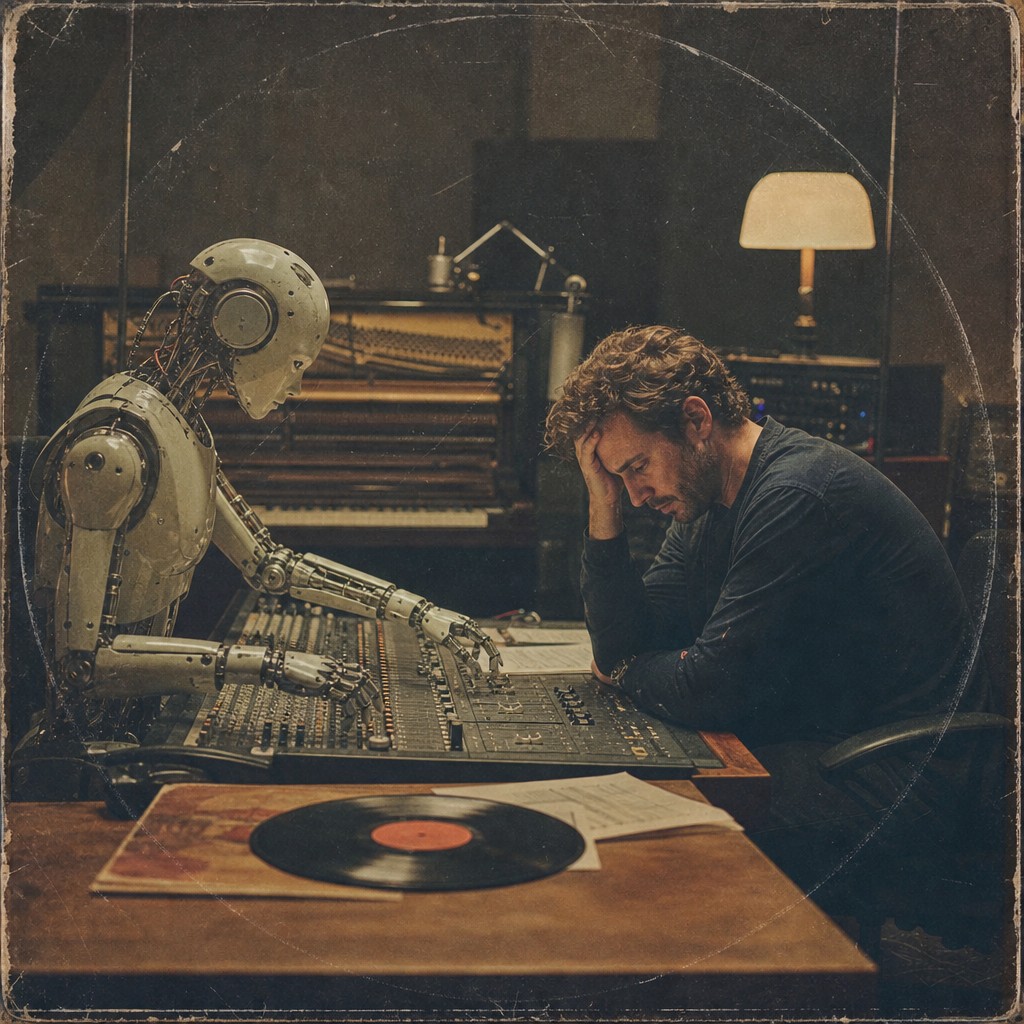
The Limits of AI Music Generation: Why You Don’t Always Get Exactly What You Imagined
AI music generation has moved from novelty to serious creative tool in a remarkably short time. Platforms such as Donna AI and similar systems can now help musicians, producers, content creators, and hobbyists generate melodies, beats, lyrics, arrangements, and full song concepts in minutes. For anyone who has ever stared at an empty session in a digital audio workstation, that speed feels revolutionary.
But as exciting as these tools are, a growing number of creators are discovering an important truth: AI can generate music quickly, but it does not always generate the music you hear in your head.
That gap between intention and output is where the most interesting conversation about AI music begins. The technology is powerful, but music is not only a pattern. It is taste, reference, emotion, timing, cultural context, sonic texture, and countless tiny decisions that artists often make instinctively. Even the best prompt can fail to capture the complete creative vision behind a track.
Why AI Music Tools Sometimes Miss the Mark
Modern AI music generators are trained on large amounts of musical data. They learn patterns across genres, chord progressions, rhythms, moods, instrumentation, and song structures. This allows them to produce convincing results from text prompts such as cinematic synthwave ballad, upbeat acoustic pop, or dark trap beat with orchestral strings.
However, prompts are imperfect containers for musical imagination. A musician may ask for a track that feels like late-night electronic jazz with emotional piano, restrained percussion, and a chorus that lifts without becoming too commercial. To a human collaborator, that description might spark a detailed conversation. To an AI system, it becomes a probabilistic instruction based on patterns it has seen before.
The result may be close, but not exact. It might include the right instruments but the wrong groove. It might capture the mood but miss the emotional arc. It might understand the genre but exaggerate its clichés.
The Problem of Creative Specificity
One major limitation is specificity. Music creators often think in subtle contrasts:
- Warm but not vintage
- Energetic but not aggressive
- Melancholic but still hopeful
- Pop-structured but not predictable
- Experimental but still listenable
These distinctions are easy for producers to discuss in the studio, but they are difficult for AI to interpret consistently. The words themselves are subjective. What one artist calls warm, another may call muddy. What one prompt writer means by futuristic might lead the AI toward glossy EDM, while the artist actually wanted minimal ambient textures.
This is why AI music generation can feel magical one moment and frustrating the next. The system may deliver something technically impressive, but emotionally adjacent rather than emotionally accurate.
Genre-Blending Is Still a Challenge
Genre fusion is one of the clearest examples of AI’s current limitations. Many artists do not want a pure genre output. They want a blend: Afrobeat rhythm with indie rock guitars, hyperpop energy with folk songwriting, or classical strings over a lo-fi hip-hop groove.
AI tools can combine genres, but they often do so in a surface-level way. Instead of creating a true hybrid, the model may stack recognizable elements on top of each other. A request for country-trap might produce a trap beat with a banjo loop, but miss the storytelling feel of country songwriting. A prompt for jazz-metal fusion might deliver distorted guitars with saxophone flourishes, but fail to create the rhythmic complexity that makes the fusion feel authentic.
True genre-blending requires judgment. It involves deciding what to preserve, what to transform, and what to leave out. That is a deeply creative process, and while AI can assist with exploration, it often needs human direction to become musically coherent.
Why Emotional Intent Is Hard to Automate
Music is not judged only by whether the notes are correct. It is judged by how it feels. A vocal melody can be technically strong but emotionally flat. A chord progression can be harmonically valid but too generic. A beat can be cleanly produced but lack personality.
AI generation systems are improving at recognizing mood labels such as happy, sad, epic, dreamy, or dark. Still, emotional intent is rarely that simple. An artist might want a chorus that feels like relief after anxiety, or a bridge that sounds unresolved but intimate. These are narrative emotions, not just musical descriptors.
Human producers make these choices through listening, reacting, and revising. They notice when a snare is pulling attention away from the vocal, when a bassline changes the emotional color of a verse, or when a melody needs one unexpected note to feel human. AI can suggest possibilities, but it does not truly understand why one version moves listeners more than another.
The Role of Human Collaboration
The strongest use of AI in music today is not replacement. It is collaboration.
Tools like Donna AI can help creators move faster by generating starting points, alternate versions, and unexpected ideas. They can break creative blocks, sketch arrangements, or create a base for experimentation. But the artist still provides the taste, editing, emotional direction, and final judgment.
A productive AI-assisted workflow might look like this:
- Generate several rough song ideas from different prompts
- Identify the strongest melody, groove, or atmosphere
- Rewrite lyrics or adjust the structure manually
- Re-record vocals or instruments for authenticity
- Use a producer’s ear to refine dynamics, transitions, and mix choices
- Iterate with more precise prompts based on what worked and what missed
In this model, AI becomes a creative accelerator rather than a creative authority. It offers raw material. The human artist turns that material into a statement.
Better Prompts Help, But They Are Not Everything
Prompt writing has become an important skill for AI music creation. More detailed prompts can reduce mismatches. Instead of asking for an emotional pop song, a creator might specify tempo, instrumentation, vocal style, lyrical theme, arrangement arc, reference mood, and production texture.
Yet even strong prompts cannot solve every limitation. Music is iterative by nature. Artists often discover what they want only after hearing what they do not want. That discovery process is difficult to compress into a single command.
The best results usually come from treating AI output as a draft. If the first version is too polished, ask for something rawer. If the beat is too aggressive, request softer percussion. If the chorus feels generic, experiment with a more unusual chord movement or melody structure. The creative process remains a conversation, even if one side of the conversation is an algorithm.
What This Means for the Future of Music Production
AI music generation will continue to improve. Future tools will likely offer more granular control over arrangement, sound design, vocal phrasing, stems, genre weighting, and emotional progression. Musicians may be able to shape AI-generated tracks in real time, adjusting the feel of a chorus or the intensity of a drum pattern with far greater precision.
Even then, the human role will remain central. Listeners connect with intention. They respond to choices that feel personal, imperfect, risky, or culturally meaningful. AI can imitate patterns, but artists create context.
Final Thoughts
AI music tools like Donna AI are changing how songs are imagined and produced. They make music creation more accessible, faster, and more experimental. But they also reveal the limits of language, automation, and pattern recognition in a deeply emotional art form.
You may not always get exactly what you imagined from an AI music prompt. But that does not make the technology a failure. It makes it a collaborator with strengths and blind spots. The future of AI music will belong to creators who understand both: the speed of the machine and the sensitivity of the human ear.
Ready to create your own song?
Turn any idea into a full track with Donna's AI music generator — in minutes, no experience needed.
Try Donna Now
