STEM Separation Explained: How Donna AI Is Redefining Vocals, Instrumentals, and Music Creation
Learn how STEM separation and Donna AI help artists split vocals, remix tracks, and create professional music with AI-powered tools.
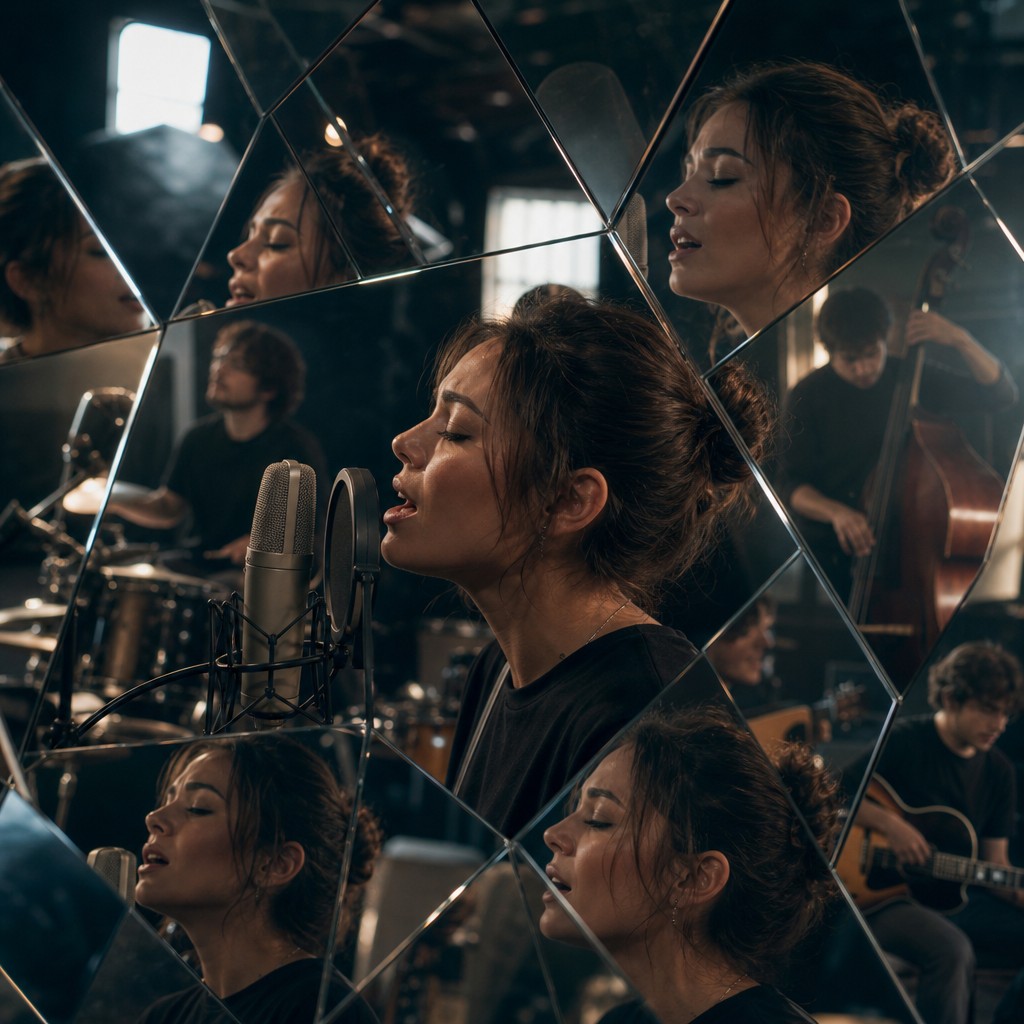
STEM Separation Explained: A New Era for Music Production
Music production has always been shaped by access. For decades, high-quality recording, mixing, remixing, and mastering required expensive studio time, technical knowledge, and professional-grade equipment. Today, artificial intelligence is changing that equation. One of the most exciting breakthroughs driving this shift is STEM separation—the ability to split a finished song into individual musical layers, such as vocals, drums, bass, and instrumentals.
At the center of this transformation is Donna AI, a music creation platform using intelligent audio tools to make professional-sounding production more accessible to everyone. Whether you are a first-time creator experimenting with melodies or an experienced artist looking for faster workflows, STEM separation opens up creative possibilities that were once limited to trained engineers.
What Is STEM Separation?
In music production, a stem is an isolated audio component of a track. Common stems include:
- Vocals: Lead vocals, backing vocals, harmonies, and spoken parts
- Drums: Kicks, snares, hi-hats, percussion, and rhythm elements
- Bass: Bass guitar, synth bass, or low-frequency foundations
- Instrumentals: Guitars, keyboards, strings, pads, and other melodic elements
STEM separation uses advanced signal processing and machine learning models to analyze a complete audio file and identify patterns associated with each sound category. Instead of needing the original studio files, creators can work from a mixed track and extract usable layers.
This is especially powerful because most songs people hear online are already flattened into a single stereo file. Traditional editing gives you limited control over that file. STEM separation gives creators something closer to a studio session, allowing them to mute, isolate, enhance, rearrange, or remix key parts of the song.
Why Splitting Vocals and Instrumentals Matters
The ability to separate vocals from instrumentals has become one of the most requested features in modern music technology. It is useful for both creative and practical reasons.
For example, a singer may want to remove the original vocals from a track to create a karaoke version. A DJ may want to isolate an acapella vocal and blend it with a different beat. A producer may want to study the instrumental arrangement behind a popular song. A content creator may need cleaner background music without vocal interference.
With Donna AI, these once-complex tasks become easier to approach. Instead of manually filtering frequencies or relying on time-consuming editing techniques, users can take advantage of AI-assisted separation to move faster from idea to finished result.
How Donna AI Democratizes Music Creation
The biggest impact of Donna AI is not just technical—it is creative. By simplifying STEM separation and related production workflows, Donna AI helps lower the barrier to entry for music creation.
For New Artists
New musicians often have ideas but lack the engineering skills to fully realize them. Donna AI gives beginners a way to explore song structure, vocal placement, instrumental layers, and arrangement without needing to become audio technicians overnight.
A beginner can:
- Extract a vocal to practice harmonies
- Remove vocals to rehearse over an instrumental
- Rearrange parts of a song for inspiration
- Build demos more quickly
- Experiment with remixing in a guided, intuitive way
For Experienced Producers
Seasoned producers benefit from speed and flexibility. Even professionals who understand advanced audio editing can use AI tools to accelerate repetitive tasks and focus more energy on creative decisions.
For producers, Donna AI can support:
- Rapid remix prototyping
- Sample preparation
- Vocal cleanup workflows
- Mashup creation
- Reference track analysis
- Faster ideation during collaborative sessions
In other words, Donna AI does not replace creativity. It helps remove friction from the creative process.
Practical Use Cases for STEM Separation
STEM separation is already influencing several areas of the music and creator economy. Its applications go far beyond novelty remixes.
Remixing and Mashups
Remix culture thrives on flexibility. By separating vocals and instrumentals, creators can combine elements from different songs, change the mood of a track, or rebuild an arrangement from the ground up.
Karaoke and Performance Tracks
Vocal removal is one of the most common use cases. Artists, performers, and casual singers can create backing tracks for practice, live sets, or social content.
Music Education
Students can isolate parts of a song to study arrangement, rhythm, harmony, and production techniques. A drummer can focus on percussion, while a vocalist can analyze phrasing and tone.
Content Creation
Video creators, podcasters, and social media editors often need audio that fits a specific format. STEM separation allows them to adapt music more precisely for intros, transitions, background beds, or short-form clips.
Restoration and Cleanup
AI-assisted audio separation can also help improve older recordings by isolating noisy or crowded elements. While results depend on the source file, the technology continues to improve rapidly.
The Technology Behind the Breakthrough
Modern STEM separation relies on AI models trained on large amounts of audio data. These models learn to recognize the sonic fingerprints of different instruments and voices. Vocals, for instance, often contain distinct harmonic shapes and frequency patterns. Drums include transient-heavy hits. Bass tends to occupy lower frequencies with specific rhythmic movement.
However, separation is not simply about frequency ranges. Many instruments overlap. A vocal and guitar may share similar frequencies, and a snare drum may cut through the same midrange area as a vocal consonant. That is why AI is so important. Machine learning models can evaluate context, texture, timing, and patterns in ways that traditional equalizers cannot.
Donna AI leverages this broader AI revolution to make complex audio engineering feel more natural and user-friendly.
Industry Trends: AI Is Becoming a Creative Partner
The rise of AI-driven music tools reflects a wider trend in creative software. Artists are no longer using technology only as a recording utility. They are using it as a collaborator, assistant, and accelerator.
Key trends include:
- Faster production cycles for independent artists
- More personalized music experiences for listeners and creators
- Accessible remixing tools for non-engineers
- AI-supported songwriting and arrangement
- Hybrid workflows where human creativity guides machine precision
As these tools mature, the most successful creators will be those who learn to use AI intentionally. The goal is not to automate away artistry, but to expand what artists can do with limited time, budgets, and resources.
What the Future Holds
STEM separation is still evolving. Future versions of AI music tools may offer cleaner separation, more instrument categories, real-time editing, and deeper integration with digital audio workstations. We may also see more personalized production environments where users can describe what they want in natural language and instantly receive editable musical layers.
For platforms like Donna AI, the opportunity is clear: make advanced production feel simple, fast, and inspiring. As AI models become more accurate, creators will gain more control over every layer of sound.
Final Thoughts
STEM separation is one of the most important developments in modern music technology. By unlocking vocals, instrumentals, drums, bass, and other song elements from a finished track, it gives creators a new level of freedom.
Donna AI is helping bring that freedom to a broader audience. For beginners, it simplifies the path from musical idea to polished track. For professionals, it speeds up production and opens new creative routes. For the music industry as a whole, it points toward a future where powerful audio engineering tools are no longer limited to expensive studios.
The result is a more open, experimental, and creator-friendly music landscape—one where anyone with an idea can begin shaping sound in professional new ways.
Ready to create your own song?
Turn any idea into a full track with Donna's AI music generator — in minutes, no experience needed.
Try Donna Now
